
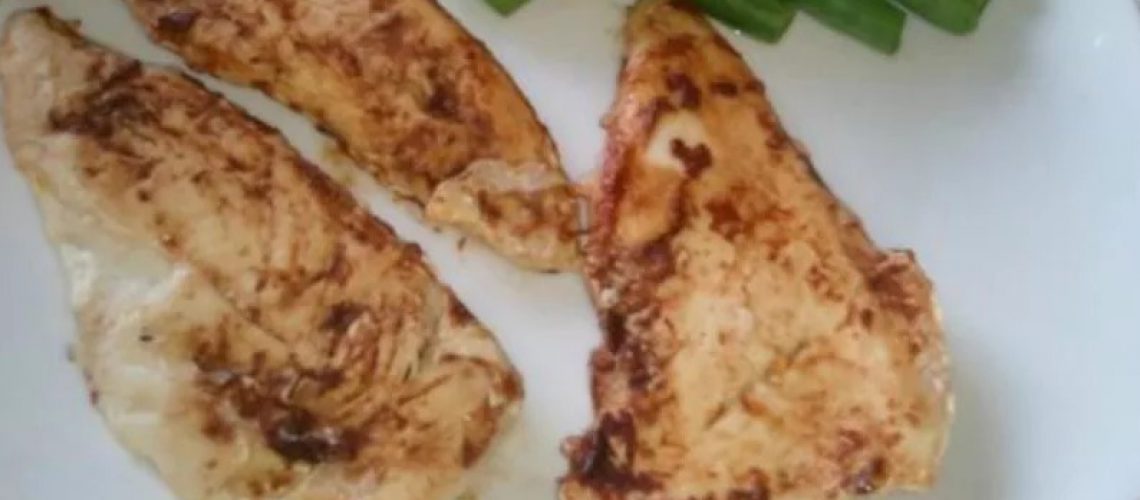
This Honey Mustard Grilled Chicken is an easy, family-friendly meal with plenty of flavor and excellent macros. Chicken breasts or tenderloins are marinated in a simple honey mustard mixture, then grilled for an easy high-protein meal.
Before the chicken goes into the marinade, half is reserved as a honey mustard dipping sauce. That lets you add as much or as little sauce as you like while tracking the chicken and dipping sauce separately.
This recipe was adapted from Honey Mustard Grilled Chicken from Once a Month Meals, a recipe we’ve made and enjoyed many times.
For easy macro tracking, the nutrition information below is provided per 100 g of the cooked marinated chicken. Weigh your cooked chicken portion after grilling. Nutrition information for the reserved honey mustard dipping sauce is provided separately in the Recipe Notes.
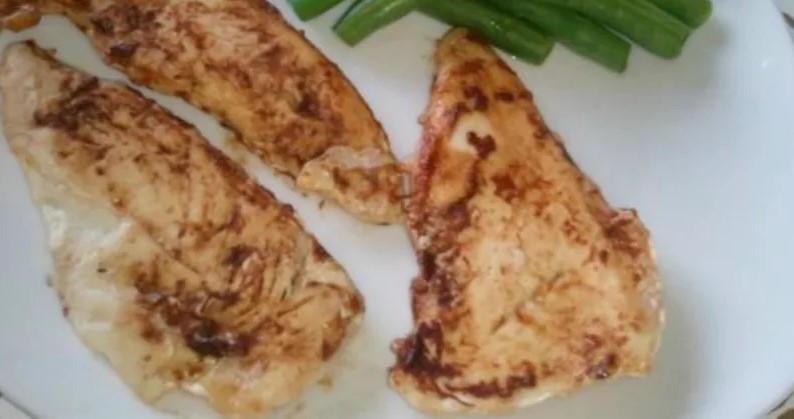
Honey Mustard Grilled Chicken
Ingredients
Method
- In a medium bowl, combine the Dijon mustard, honey, and A1 Steak Sauce. Stir until smooth and well combined.400 g Dijon mustard, 525 g honey, 34 g A1 steak sauce
- Before adding any chicken, reserve half of the honey mustard marinade in a separate container to use as dipping sauce. Refrigerate until ready to use.
- Place the chicken breasts or tenderloins in a large bowl or resealable bag. Add the remaining half of the honey mustard marinade and toss until the chicken is evenly coated.2725 g chicken breasts or tenderloins
- Cover and refrigerate until ready to grill. For meal prep, a portion of the marinated chicken can also be frozen at this point for another meal.
- Preheat the grill to medium-high heat. Remove the chicken from the marinade and discard the marinade that has been in contact with the raw chicken.
- Grill until the thickest part of the chicken reaches an internal temperature of 165°F (74°C). Cooking time will vary depending on the thickness of the chicken.2725 g chicken breasts or tenderloins
- Weigh your cooked chicken portion in grams for tracking. If using the reserved honey mustard dipping sauce, weigh the sauce separately and use the nutrition information in the Recipe Notes below. The reserved sauce can be served cold or gently warmed.