
Yes — whenever practical, weighing your food is the most accurate way to track what you’re eating.
It’s surprisingly difficult to consistently estimate portion sizes by sight, especially with calorie-dense foods. A little extra peanut butter, cooking oil, cheese or dressing, for example, can make a meaningful difference without looking like much on the plate.
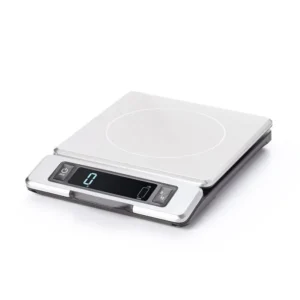
For the best accuracy, use these methods in this order:
1. Weigh your food in grams.
This is generally the most precise and easiest method, especially when the nutrition information provides a serving weight in grams.
2. Weigh your food in ounces when grams aren’t practical.
3. Use volume measurements when weighing isn’t practical.
Measuring cups, tablespoons, teaspoons and milliliters can work well for foods where volume measurements make sense.
4. Estimate when you can’t weigh or measure.
Restaurants, travel and social events aren’t always going to give you access to a food scale. Make your best reasonable estimate, log it, and move on.
You don’t need to become obsessive about microscopic amounts of food. The goal is consistent, useful accuracy — not laboratory precision.
Pay particular attention to foods that are easy to underestimate, including oils, butter, dressings, sauces, nut butters, nuts, cheese and other calorie-dense foods.
And remember the MacroRx+ Golden Rule:
“Log it before you eat it.”
Weigh or measure your portion, enter it into MyFitnessPal, see how it fits into your prescription, and adjust the portion if necessary before you start eating.
The more accurate your logging is, the better the information your coach has when evaluating your progress and deciding whether your prescription needs to change.